Common Causes of Commercial Roof Leaks in Flat Roofing Systems
Commercial roof leaks rarely happen overnight. In most cases, they develop gradually due to membrane wear, drainage problems, or flashing failure. Flat and low-slope roofing systems are designed for durability, but over time, environmental exposure and structural movement can create vulnerabilities that allow moisture intrusion.
Understanding the most common causes of commercial roof leaks helps facility managers address issues early and avoid costly interior damage or operational disruption.
1. Membrane Seam Separation
Flat roofing systems such as TPO, EPDM, and modified bitumen rely on properly sealed seams to remain watertight. Temperature fluctuations, expansion and contraction, and aging adhesives can weaken seam integrity over time.
When seams begin to separate, water can travel beneath the membrane and remain undetected until interior staining or ceiling damage appears. Routine inspections and timely commercial roof repair can address seam issues before they escalate.
2. Flashing Failure Around Roof Penetrations
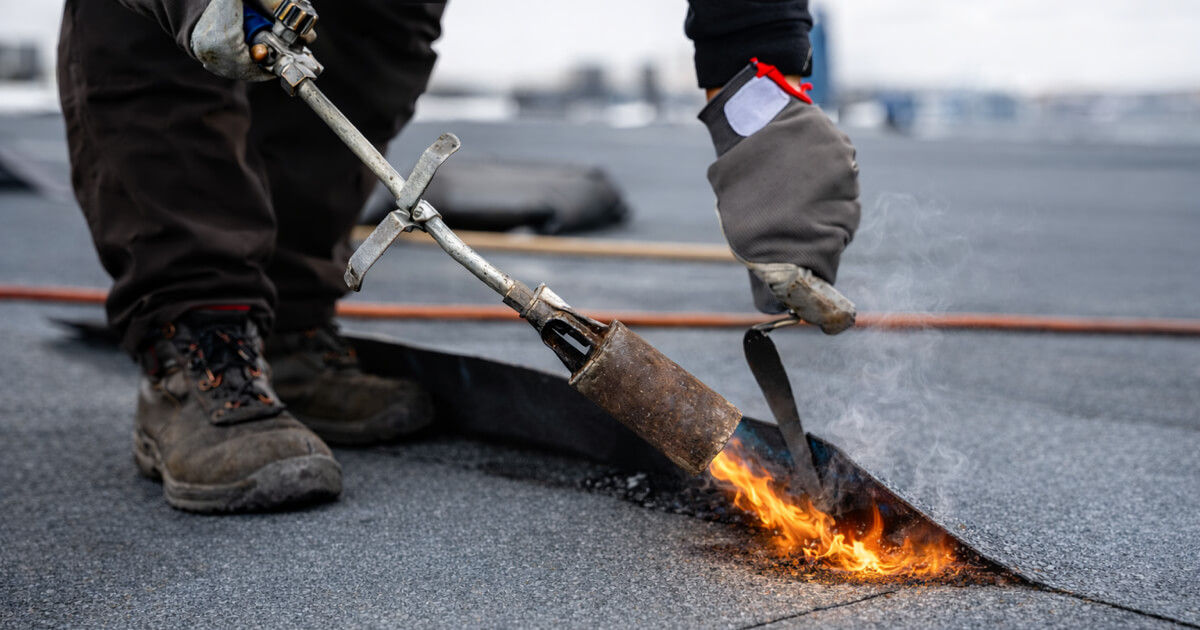
Rooftop penetrations — including HVAC units, vents, skylights, and mechanical curbs — are common leak points. Flashing is designed to seal these transition areas, but improper installation, sealant deterioration, or movement can cause cracks and gaps.
Once flashing fails, even minor rainfall can lead to interior leaks. Professional flat roof repair focuses on restoring flashing integrity and resealing penetrations to prevent recurring problems.
3. Ponding Water and Drainage Issues
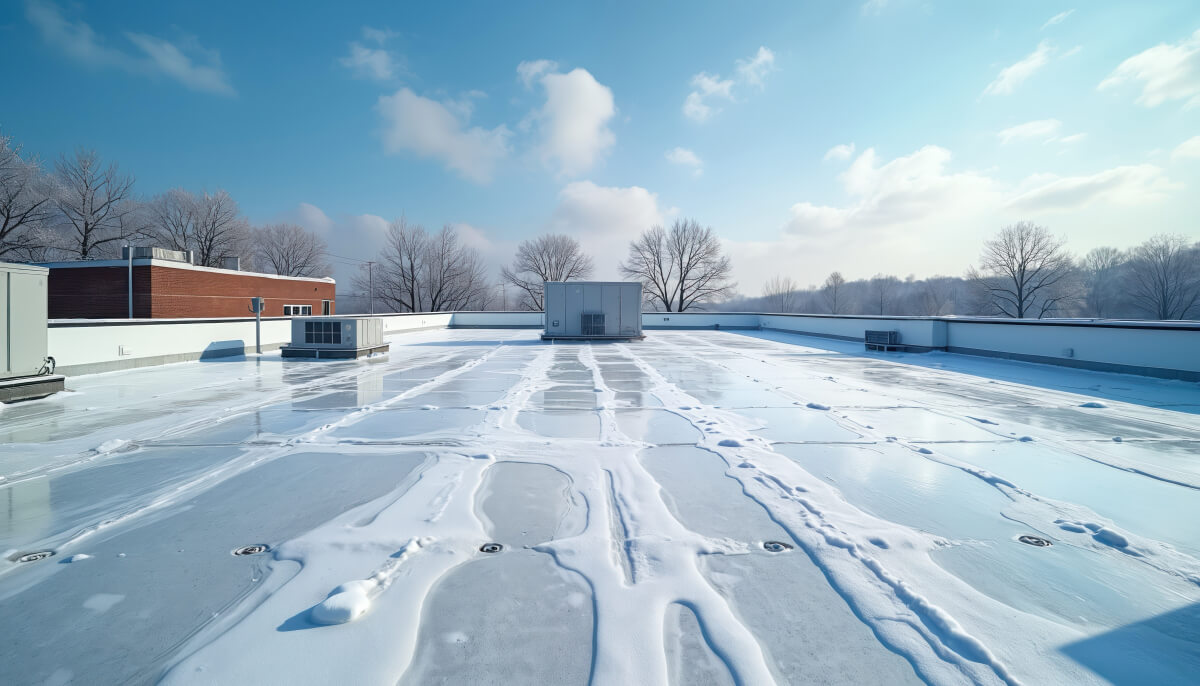
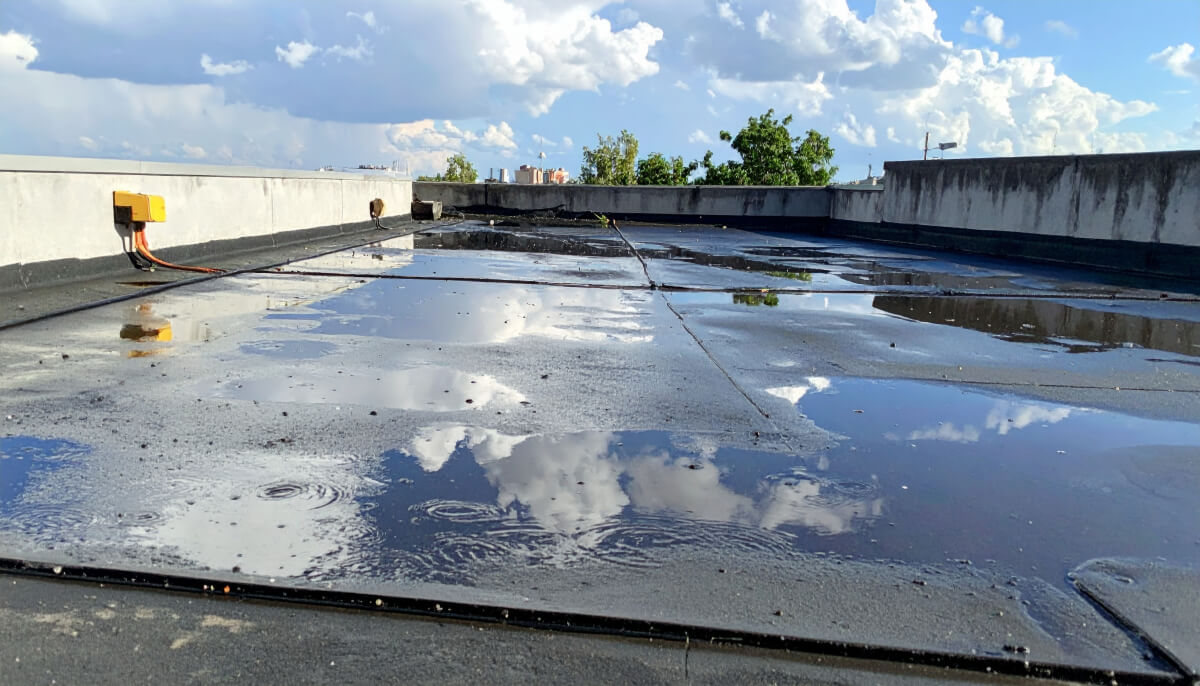
Flat roofs are engineered with subtle slopes to guide water toward drains and scuppers. When drainage becomes obstructed or surface depressions form, water can accumulate and remain for extended periods.
Prolonged ponding accelerates membrane deterioration and increases the risk of seam failure. Facilities across the greater St. Louis region and the Chicago area often experience seasonal ponding after freeze-thaw cycles and heavy storms.
4. Weather-Related Membrane Damage
Wind uplift, hail impact, and extreme temperature changes can cause membrane punctures, blistering, or shrinkage. Over time, these vulnerabilities create entry points for moisture.
Midwest weather patterns can accelerate roof deterioration, particularly on aging flat roofing systems exposed to repeated seasonal stress. Addressing storm-related damage quickly through professional commercial roof repair helps prevent widespread failure.
5. Aging Roofing Systems
Even properly installed commercial roofing systems have a finite lifespan. As membranes age, they lose flexibility and resistance to UV exposure. Sealants dry out, fasteners loosen, and flashing materials degrade.
Older roofs are significantly more vulnerable to leaks and often require targeted repairs to extend performance before full replacement becomes necessary.
Signs Your Commercial Roof May Be Leaking
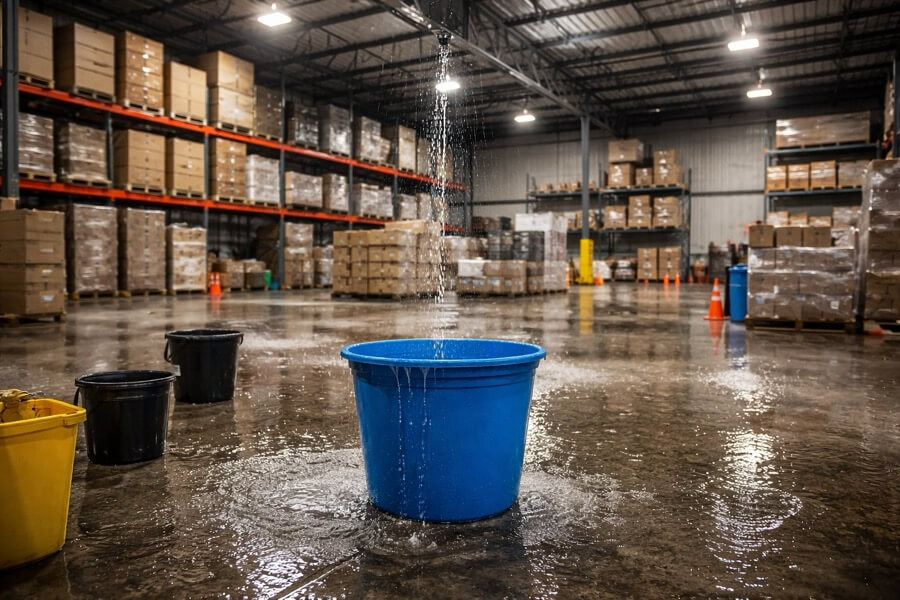
Facility managers should watch for:
- Interior ceiling stains
- Damp insulation
- Musty odors
- Bubbling or blistered membrane areas
- Increased energy costs
If any of these symptoms appear, scheduling a professional roof inspection is critical.
Schedule a Commercial Roof Repair Evaluation
Identifying the root cause of a leak is essential to preventing repeat issues. Rather than applying temporary patches, professional inspections evaluate seam integrity, flashing performance, drainage conditions, and overall membrane health.
If your facility is experiencing leak concerns or showing early warning signs, contact us to schedule a commercial roof repair evaluation. Early intervention helps protect your building, reduce long-term costs, and extend roof life.