Common EPDM Roof Problems and How Commercial Roofs Can Be Restored
EPDM roofing systems are widely used on commercial and industrial buildings because of their durability, flexibility, and ability to withstand changing weather conditions. However, even a well-installed rubber roofing system can develop problems over time. Exposure to sunlight, temperature fluctuations, rooftop activity, and aging materials can gradually affect membrane performance, potentially leading to leaks and costly interior damage.
Fortunately, many common EPDM roofing problems can be addressed without replacing the entire roof. With professional commercial roofing services, building owners can identify developing issues, make targeted repairs, and explore restoration options that help extend the useful life of their existing roofing systems.
Understanding How EPDM Roofing Systems Age
EPDM (ethylene propylene diene monomer) is a synthetic rubber roofing membrane commonly installed on flat and low-slope commercial buildings. Its flexibility and resistance to weathering make it a popular choice for warehouses, manufacturing facilities, office buildings, and other commercial properties.
Although EPDM roofing systems are designed for long-term performance, their condition can change as they age. Adhesives, seams, flashing details, and rooftop penetrations may deteriorate at different rates than the membrane itself. Understanding these potential vulnerabilities is important when evaluating whether an aging EPDM roof needs localized repairs, more extensive restoration, or replacement.
Common EPDM Roof Problems
Seam Separation and Adhesive Failure
Many EPDM roofing systems use adhesive-based seams or specialized seam tapes to connect membrane sections. Over time, installation deficiencies, aging materials, or repeated thermal movement can contribute to seam separation.
When seams lose their watertight seal, moisture may enter beneath the roofing membrane and potentially damage the underlying insulation.
Professional repairs may involve cleaning and preparing the affected area, applying compatible seam materials, or installing reinforced membrane patches. The appropriate repair depends on the condition of the existing seam and surrounding roofing materials.
Punctures and Membrane Damage
Commercial rooftops frequently support HVAC equipment, ventilation systems, and other mechanical components that require periodic maintenance. Foot traffic, dropped tools, sharp debris, and equipment movement can puncture or tear EPDM membranes. Even relatively small openings can allow water to enter the roofing assembly.
Fortunately, isolated membrane damage can often be addressed through targeted repairs using compatible EPDM materials, helping restore waterproofing without replacing large sections of the roof.
Flashing and Roof Penetration Failures
Flashing details are among the most vulnerable areas of many commercial roofing systems. Roof drains, pipes, HVAC curbs, parapet walls, and other penetrations create transitions that require careful waterproofing. As roofing materials age and buildings experience thermal movement, these areas may develop openings or deteriorated seals.
Identifying and correcting flashing failures is an important part of professional commercial roof repair, particularly when leaks appear near rooftop equipment or building transitions.
Ponding Water and Drainage Problems
Although EPDM membranes are designed to resist moisture, prolonged standing water can expose weaknesses in seams, flashing, and other roof details.
Ponding water may result from clogged drains, inadequate slope, structural settlement, or deteriorated drainage components. Over time, these conditions can accelerate localized deterioration and increase the risk of water intrusion. Correcting drainage problems may involve cleaning roof drains, repairing affected areas, or modifying drainage conditions as part of a larger restoration project.
Membrane Shrinkage and Aging
Some older EPDM roofing systems may experience dimensional changes that place additional stress on perimeter details, seams, and penetrations. This movement can contribute to membrane tension, displaced flashing, or separation around rooftop components.
While minor localized issues may be repairable, more extensive shrinkage requires careful evaluation to determine whether the existing roofing system can continue performing reliably.
Can an Aging EPDM Roof Be Restored?
Aging does not automatically mean an EPDM roof has reached the end of its useful life. In many cases, the membrane remains serviceable even when individual components require attention.
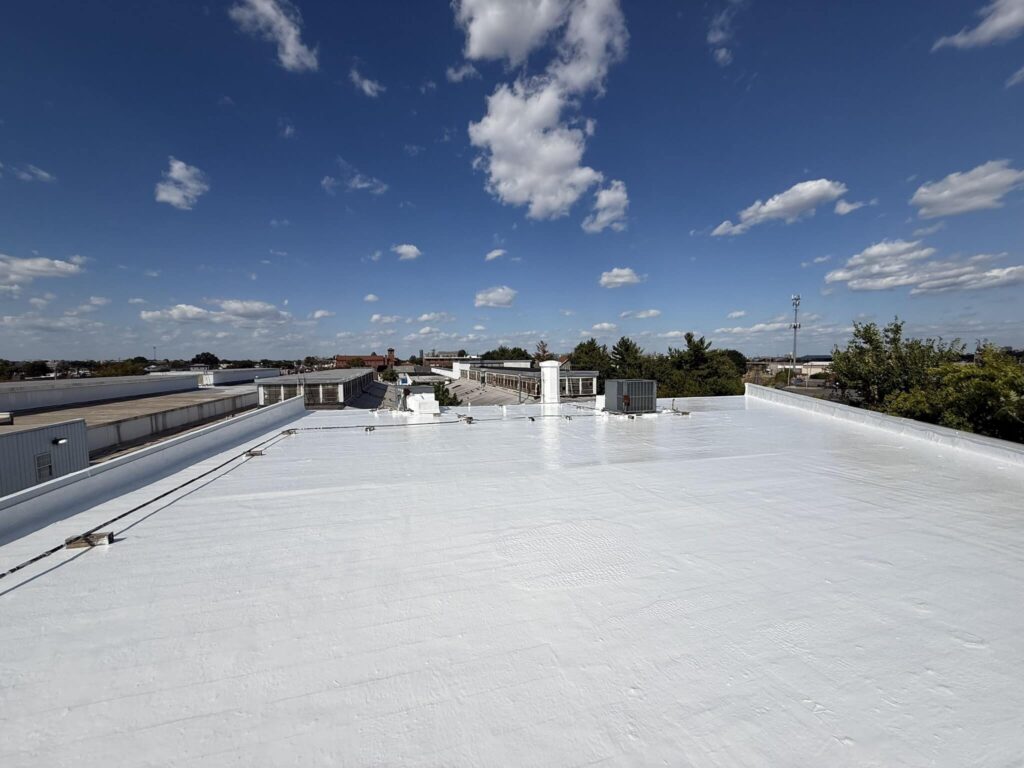
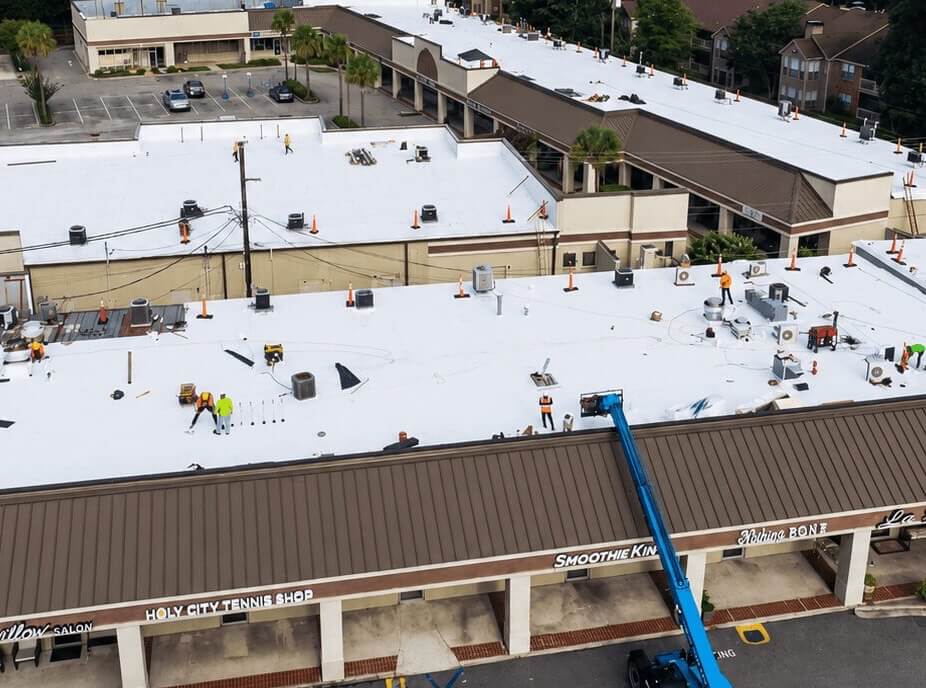
Professional commercial roof restoration focuses on addressing existing deficiencies and improving the performance of the roofing system without automatically requiring a complete tear-off.
Depending on roof conditions, restoration work may include:
- Repairing separated seams and damaged membrane sections
- Replacing deteriorated flashing around penetrations
- Addressing localized moisture intrusion
- Correcting drainage-related issues
- Reinforcing vulnerable roof details
- Applying a compatible protective coating system when appropriate
The goal is to preserve the existing roofing system where practical while restoring dependable weather protection.
Are Roof Coatings an Option for EPDM Roofing?
Certain EPDM roofing systems may benefit from compatible restoration coatings designed to provide additional protection against weathering and UV exposure.
However, coating an EPDM roof requires careful attention to membrane preparation, adhesion, existing roof conditions, and manufacturer requirements. Not all coatings are compatible with EPDM, and specialized primers or preparation procedures may be necessary.
Professional commercial roof coatings can be part of a broader restoration strategy when the existing membrane and roofing assembly are suitable. A coating should not be viewed as a substitute for correcting active leaks, damaged insulation, or deteriorated flashing. Those problems must be properly addressed before a restoration coating is installed.
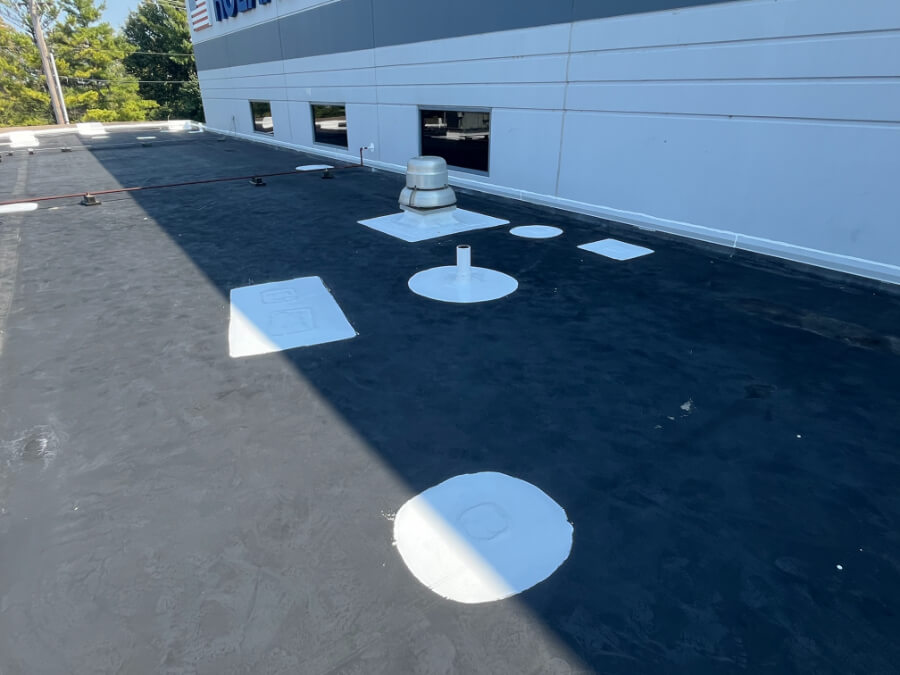
Real-World EPDM Roof Repairs: Roland Machinery
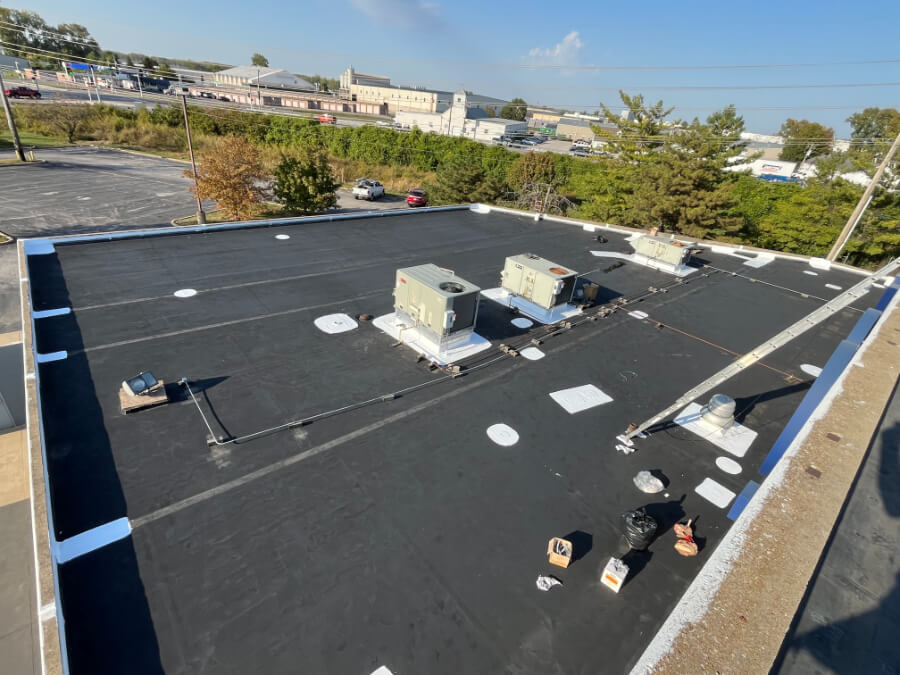
Commercial Flat Roof Company's work at Roland Machinery in Bridgeton, Missouri, demonstrates how targeted repairs can address problems in an existing EPDM roofing system.
The approximately 42,650 Sq. Ft. project involved identifying and repairing leaks affecting the building's lower office and upper shop roofing areas. Rather than automatically pursuing a full roof replacement, the work focused on correcting identified deficiencies in the existing EPDM system.
Read more about the EPDM roof leak repair project at Roland Machinery to see an example of commercial roof repair work in practice.
When Is EPDM Roof Replacement Necessary?
While many EPDM roofing problems can be repaired, some conditions may make replacement the more practical long-term solution.
Extensive membrane deterioration, widespread moisture damage, saturated insulation, significant shrinkage, or recurring failures across multiple roof areas can indicate that localized repairs are no longer sufficient.
A professional evaluation should consider the condition of the entire roofing assembly, not just the visible membrane surface. When an existing roof can no longer provide reliable protection, commercial roof replacement may offer greater long-term value than continuing to invest in temporary repairs.
Regular Inspections Help Extend EPDM Roof Life
Preventative maintenance plays an important role in maximizing the performance of commercial EPDM roofing systems. Routine commercial roof inspections can identify developing problems before they result in significant water intrusion or costly building damage.
During an inspection, roofing professionals may evaluate membrane condition, seam integrity, flashing details, rooftop penetrations, drainage components, and previous repair areas. Addressing small problems early can help building owners reduce unexpected repair expenses, maintain roofing performance, and make more informed decisions about future restoration needs.
Protect Your EPDM Roof With Experienced Commercial Roofing Professionals
EPDM roofing systems can provide years of dependable protection, but maintaining that performance requires an understanding of how rubber membranes age, where failures commonly occur, and which repair methods are appropriate.
At Commercial Flat Roof Company, we specialize in commercial and industrial roofing repairs, maintenance, and restoration throughout the St. Louis and Chicago regions. Our team evaluates existing roofing systems to identify practical solutions that address leaks, restore weather protection, and help property owners maximize the life of their roofing investments.
Whether your EPDM roof needs isolated leak repairs or a more comprehensive restoration strategy, our experienced professionals can help determine the best path forward.